
Sunshine in short supply? Here's what to know
by Caylin Cheney, Advanced Registered Nurse Practitioner
This post is the fourth in a new series called Supplements, Simplified where I walk through individual supplements — what they are, what the evidence actually shows, and whether I think they're worth your time and money. I’ve also written about creatine, magnesium, and iron.
Key Takeaways
Vitamin D helps your body absorb calcium and supports bone, muscle, and immune function.
Your skin makes some vitamin D from sunlight, but that is often not enough to meet your needs, especially in less sunny climates.
Food sources of vitamin D are limited, so it's hard to get enough from diet alone.
More isn't better. Too much vitamin D can cause real problems, so it's always smart to test and talk with your provider rather than guessing.
The days are getting shorter and that means all of us are getting less vitamin D than normal. And here in Washington, we already don’t get a lot of sun – with Olympia only getting around 52 full-sun days a year and Seattle getting just 20 more than that.
So as a nurse practitioner based in the Evergreen State, it makes sense that vitamin D is a supplement I get asked about often. And I’m glad I do, because research is emerging that shows severe cases of vitamin D deficiency are linked with higher rates of hospitalization for respiratory infections like bronchitis and pneumonia. That means increasing your vitamin D intake can really reduce your risk of getting severe respiratory infections.
But on the flip side, some of its benefits have been overstated. So, let's take a balanced look and sort out what vitamin D does, who needs more of it, and how to approach it without overdoing it.
What is vitamin D and why do we need it?
Vitamin D is a nutrient that works more like a hormone in the body. Unlike most nutrients we’ve discussed in this series, your body can make it by itself: when your skin is exposed to ultraviolet B rays from the sun, it begins producing vitamin D, which your liver and kidneys then convert into its active form. Of course, you can also get it from some foods and from supplements.
Vitamin D’s best-known job is helping your body absorb calcium from your gut, which is essential for building and maintaining strong bones. But vitamin D receptors are found throughout the body, and it also plays a role in:
Muscle function
Immune system regulation
Nerve signaling
Cell growth and communication
When vitamin D is very low, bones can become soft and weak. This can cause rickets in children (often appearing as bowed legs) and osteomalacia in adults (usually showing up as bone pain in the lower half of the body).
How much vitamin D do I need?
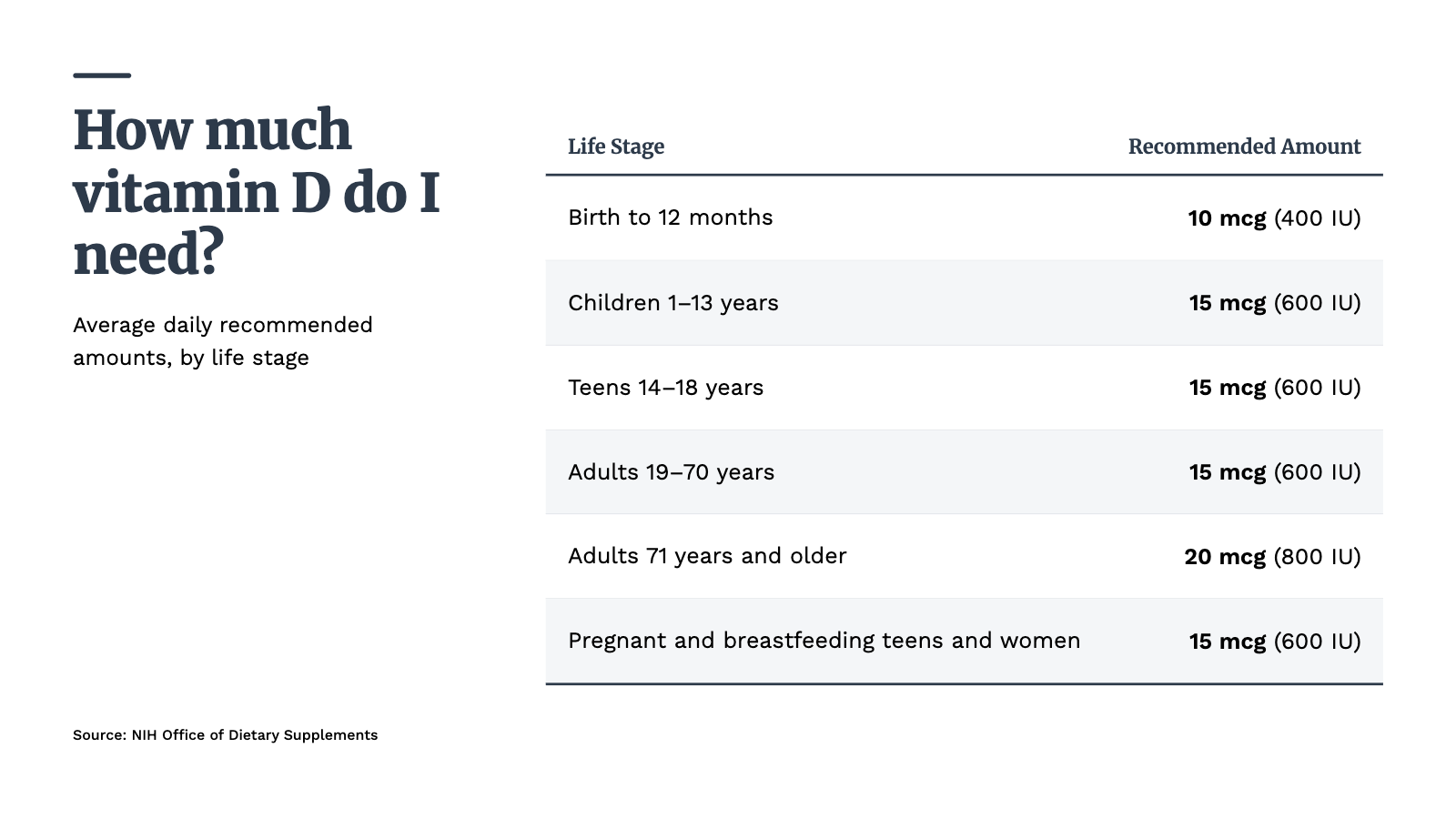
The recommended dietary allowance of vitamin D from the time you’re a year old to 70 years old is 15 mcg (micrograms) or 600 international units. When you’re less than a year old, you only need about 10 mcg; when you’re 71 or older you need more–about 20 mcg. However, these are just general recommendations.
Your individual needs may be higher depending on your sun exposure, skin tone, body weight, absorption, and health history. The upper limit considered safe for adults without medical supervision is 4,000 IU (100 mcg) per day.
How can you get enough vitamin D?
Sunlight
Sun exposure is the most natural source of vitamin D, but it's less reliable than a lot of us have been led to believe. At northern latitudes like Washington's, the sun sits too low in the sky from roughly October through March for your skin to make much vitamin D, no matter how long you're outside. Other factors that reduce production include:
Sunscreen use (which I still recommend for skin cancer prevention)
Darker skin tones, since more melanin means less UVB absorption
Older age, since skin becomes less efficient at making vitamin D
Indoor lifestyles and covering most of your skin outdoors
Foods
Very few foods naturally contain meaningful amounts of vitamin D, which is why fortified foods can help. Here's roughly what you'd get from common sources:
Cod liver oil (1 tablespoon): about 1,360 IU
Trout, cooked (3 oz): about 645 IU
Sockeye salmon, cooked (3 oz): about 570 IU
UV-exposed mushrooms (½ cup, sliced): about 366 IU
Fortified milk or plant milk (1 cup): about 120 IU
Fortified orange juice (1 cup): about 100 IU
Egg yolk (1 large): about 44 IU
The main takeaway? Fatty fish is the standout food source of vitamin D. If you're not eating it a few times a week, it's difficult to hit your target through food alone.
Supplements
Vitamin D supplements come in two main forms: D2 , which comes from plant sources, and D3 , which is the form your skin makes. D3 tends to raise and maintain vitamin D levels in your blood more effectively, so it's the form I generally recommend if you’re taking a supplement.
And don’t forget to take your supplement with food! Because vitamin D is fat-soluble, it's best absorbed when taken with a meal that contains some fat.
Signs and symptoms: too much or not enough?
Vitamin D deficiency
Mild deficiency often causes no obvious symptoms, so it can often go unnoticed. As it becomes more significant, it can show up as:
Fatigue or low energy
Bone pain or tenderness
Muscle weakness, aches, or cramps
Frequent illness or slow recovery
Low mood
Many of these symptoms are nonspecific and overlap with plenty of other conditions, so they're not enough to diagnose a deficiency on their own. Over the long term, low vitamin D is associated with weaker bones and a higher risk of fractures.
Too much vitamin D
Toxicity almost never comes from food or sunlight. It's nearly always from supplements, especially high doses taken for a long time. Excess vitamin D causes calcium to build up in the blood (hypercalcemia), which can lead to:
Nausea, vomiting, and poor appetite
Constipation
Excessive thirst and frequent urination
Weakness, confusion, or fatigue
Kidney problems, including kidney stones
Because vitamin D is stored in body fat rather than flushed out quickly, taking too much can have lingering effects. This is exactly why the "more is better" approach is the wrong one to take.
How are vitamin D and calcium linked?
Vitamin D and calcium are a package deal. Without enough vitamin D, you only absorb a fraction of the calcium you eat, no matter how much calcium-rich food or supplementation you're taking in. When vitamin D is low, your body compensates by pulling calcium out of your bones to keep blood levels stable, which can weaken them over time.
That said, more isn't better on the calcium side either. For most people, I recommend getting calcium from food (like dairy, fortified plant milks, leafy greens, and tofu) rather than reaching for high-dose calcium supplements. Excess calcium from supplements can contribute to kidney stones and constipation, and it's another area where you should talk with your provider about what you need.
How to test for vitamin D deficiency
Vitamin D status is measured with a simple blood test with a not-so-simple name: 25-hydroxyvitamin D. Here’s a table to help you understand your results:
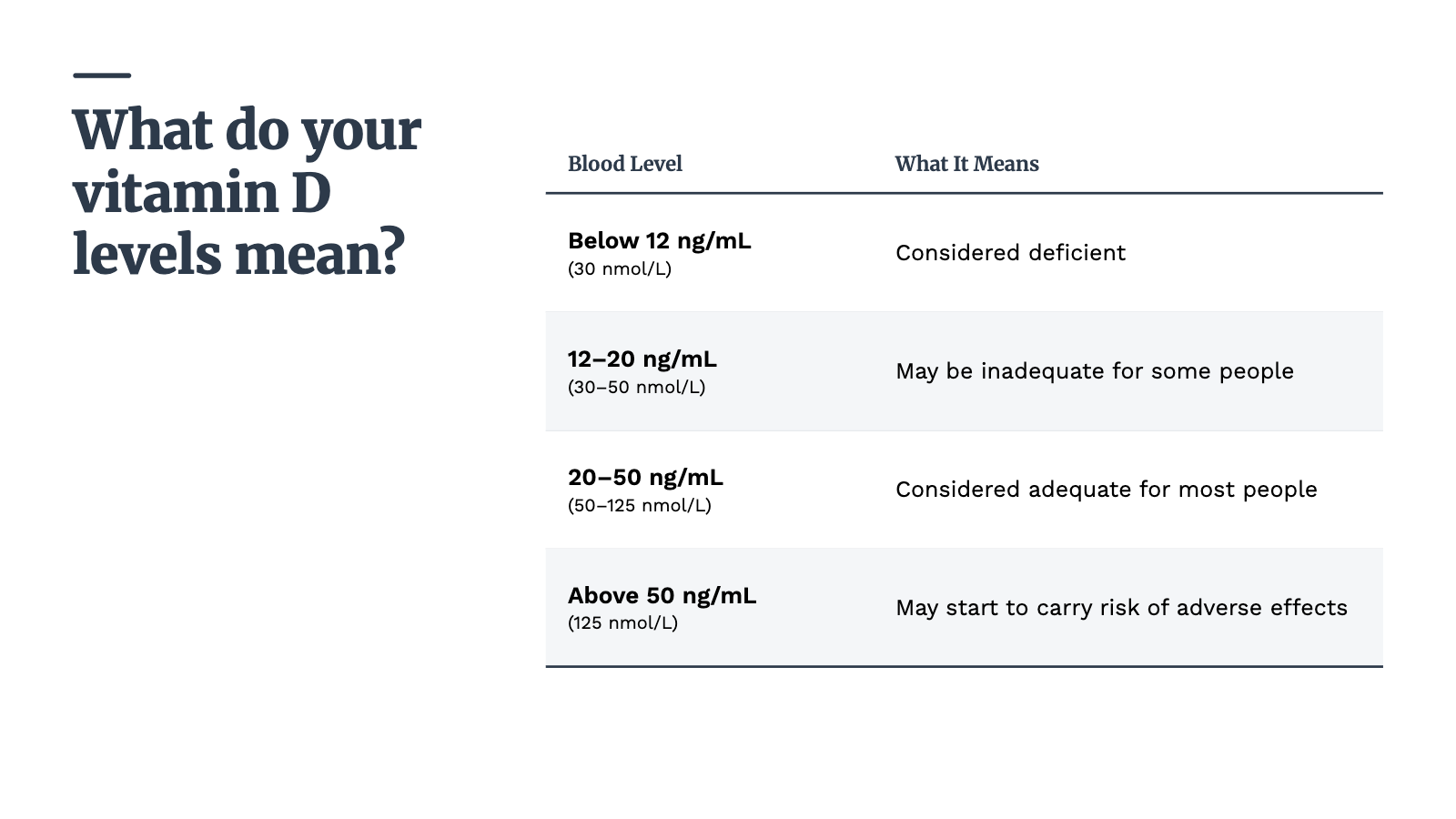
Routine screening isn't necessary for everyone. Testing makes the most sense if you have risk factors or symptoms, such as limited sun exposure, darker skin, osteoporosis or fractures, digestive conditions that affect absorption (like celiac disease or Crohn's), kidney or liver disease, obesity, or use of certain medications that affect vitamin D metabolism.
Should I supplement?
You guessed it… it depends! Here's how I think about it:
If you live in a northern or cloudy climate, spend most of your time indoors, or have darker skin, a modest daily supplement during the fall and winter months is reasonable for many people, and I recommend it to some of my patients.
If you've been diagnosed with a deficiency, supplementation is warranted, and I'll typically recommend a specific dose based on how low your levels are, followed by a recheck.
If you eat fatty fish regularly and get regular sun exposure, you may not need one at all.
For most people who do choose to supplement, a daily vitamin D3 in the range of 1,000–2,000 IU is a common approach that most people tolerate well. Individual needs vary, so I'd rather you check in with me than start with high-dose products or weekly mega-doses on your own.
One more thing worth knowing: the benefits of vitamin D have been overstated at times. Large trials have not shown that taking extra vitamin D prevents cancer, heart disease, or fractures in people who already have adequate levels. That's why I focus on identifying who truly needs it rather than recommending it for everyone.
As with the other supplements in this series, look for brands that are third-party verified (since supplements aren't regulated by the FDA the way medications are) and remember that spending more doesn’t necessarily mean you’re getting a better product.
Here’s what to takeaway from this
Vitamin D is important to so many of our body’s functions, and a lot of us in the Pacific Northwest don't get as much of it as we need, especially in the darker months. But it's a nutrient where both too little and too much can cause problems, so, as always, being intentional is key!
If you're wondering about your levels, bring it to your visit and we can decide together whether testing or supplementing makes sense for you.