
Iron is crucial for almost every part of our bodies. Do you know if you’re getting enough?
by Caylin Cheney, Advanced Registered Nurse Practitioner
This post is the third in a new series called Supplements, Simplified where I walk through individual supplements — what they are, what the evidence actually shows, and whether I think they're worth your time and money. So far, we’ve covered creatine and magnesium. Next up: iron
Key Takeaways
Iron is essential for oxygen transport, bone health, and more — and both too little and too much can cause real problems.
Women, especially those of reproductive age, are disproportionately affected by iron deficiency.
A full picture of your iron status requires more than one lab value. Ferritin alone doesn't tell the whole story.
Low ferritin doesn’t produce a distinctive facial appearance, despite a recent social media trend saying so.
I see it all the time: People genuinely trying to better understand their health, getting taken in by a social media trend not really grounded in science. The latest one I’ve seen: so-called “ferritin face.”
If you haven’t run into it yet, the idea goes like this: Low iron supposedly leaves visible clues on your face, like dark circles under the eyes and pale or grey-looking skin, and some influencers say raising their ferritin levels transformed their complexion in ways no product could. The videos usually come with before-and-after photos, or a checklist of features you’re meant to compare against your own face to assess your iron status.
I get it! It feels empowering to think you can look in the mirror and learn something about your body. But low ferritin doesn’t necessarily produce a distinctive facial appearance. Dark circles and a tired-looking complexion have many possible explanations: genetics, thin under-eye skin, allergies, poor sleep, dehydration, aging, even lighting. Meanwhile, plenty of people with low iron look fine!
As Chloe Casey recently wrote in The Conversation, “A mirror can’t tell you whether your ferritin is low – only a blood test can do that.”
So let’s start from the beginning: Here’s a science-backed breakdown on everything you need to know about iron and ferritin.
What is iron and how much do I need?
It’s not just what you pump at the gym. Iron is an essential mineral that plays a role in muscle, bone, hormone, and organ health. The most well-known function of iron in the body is to make hemoglobin, a protein in red blood cells. Hemoglobin carries oxygen from our lungs throughout our bodies and carries carbon dioxide back out of the body and into the lungs. But iron also plays a role in our hormone levels and promotes bone health, with too much or too little iron both leading to weakened bones.
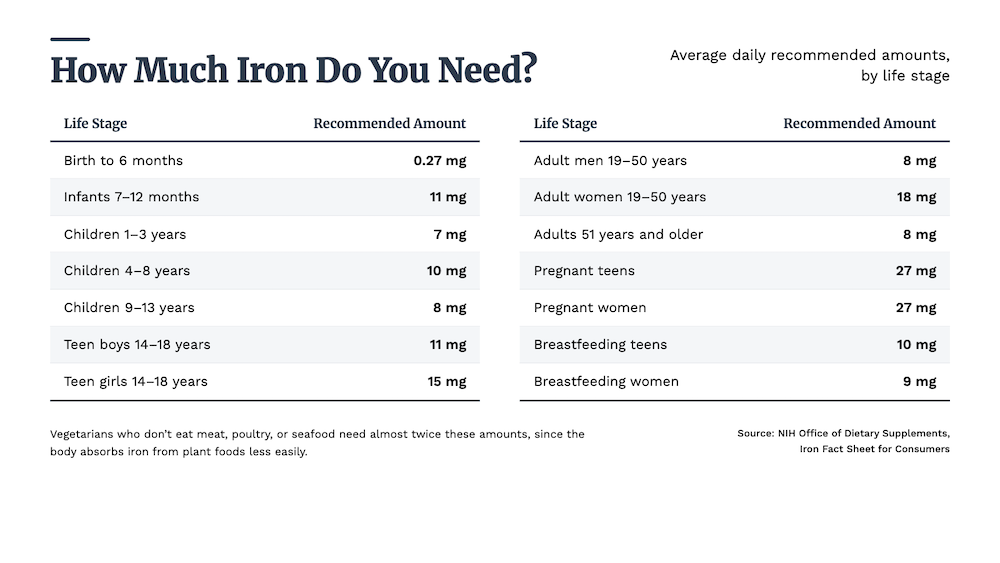
How much iron you need varies based on age, gender, and pregnancy. See the table below for a breakdown.
How can I get more iron in my diet?
Food contains two types of iron: heme and non-heme. Meat and seafood have both. Plant foods have only non-heme iron.
Your body absorbs heme iron more easily. But vegetarians, don’t worry! You can still get enough iron without meat. Just eat plant sources of iron with foods high in vitamin C, like citrus fruits or bell peppers, which help your body absorb more of it.
Good sources of iron include:
Red meat
Beans, such as red kidney beans, edamame beans, and chickpeas
Nuts
Dried fruit
Fortified breakfast cereals
Soy bean flour
What are the causes and signs of iron deficiency and anemia?
Iron deficiency happens when your body's iron stores and intake can't keep up with what's being used or lost. Often the cause is simply not getting enough iron from food, but blood loss, including heavy menstrual periods, is another common culprit. Pregnancy can also lead to deficiency because the body’s iron needs increase significantly. Finally, some people have trouble absorbing iron because of conditions like celiac disease or inflammatory bowel disease, or after certain bariatric surgeries.
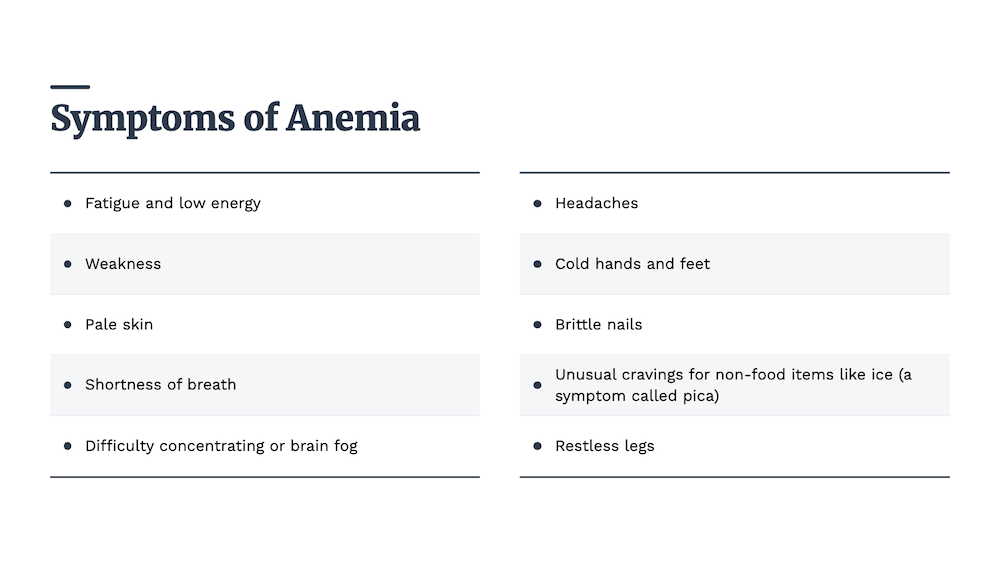
In the short term, mild iron deficiency often doesn't cause obvious symptoms, which is why it can really sneak up on people. As it progresses, it can turn into iron deficiency anemia, where your body can no longer produce enough hemoglobin and your red blood cell levels drop below normal. If this happens, symptoms can include:
Fatigue and low energy
Weakness
Pale skin
Shortness of breath
Difficulty concentrating or brain fog
Headaches
Cold hands and feet
Brittle nails
Unusual cravings for non-food items like ice (a symptom called pica)
Restless legs
Recently, the American Society of Hematology released new guidelines for diagnosing iron deficiency to “to help clinicians identify iron deficiency earlier and more accurately.”
Ferritin, like I mentioned above, is a blood test that shows how much iron your body has stored. Providers use a cutoff number to decide whether those stores are low enough to call it iron deficiency. That number is higher than it used to be, so more people now qualify as iron deficient and can get the care they need. The new guidelines also got more granular based on sex and age, which is great news since iron deficiency is more common in women. In fact, research shows “almost 40% of teenage girls and young women have low levels of iron.”
Why is iron deficiency more common in women?
Iron deficiency disproportionately affects women and folks with menstrual cycles. Women of reproductive age need roughly 18 mg of iron a day, compared to 8 mg for men and postmenopausal women, almost entirely to offset that monthly loss. Women with heavy periods, due to conditions like fibroids or endometriosis, are at even higher risk. Pregnancy adds another layer, with iron needs climbing to around 27 mg a day to support increased blood volume and fetal development.
This is a big part of why I bring up iron proactively with a lot of my patients, especially those with heavy or prolonged periods or who are or have recently been pregnant.
Getting the full picture: A comprehensive iron panel
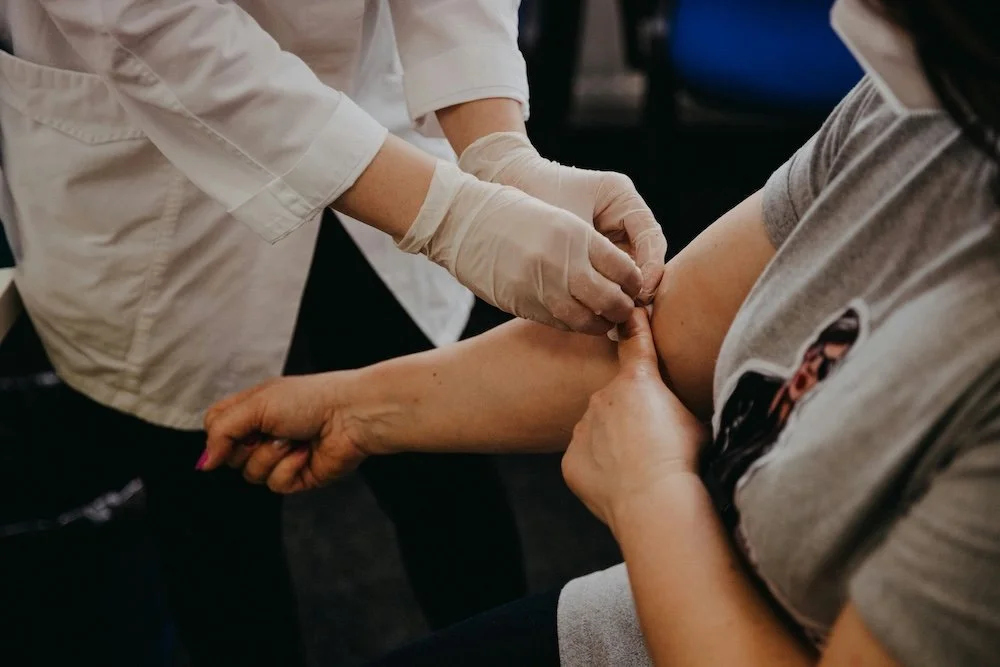
One of the most common points of confusion I see is patients getting their standard blood testing done and trying to extrapolate the full picture from just one or two lab values. Iron status is really a picture made up of several different markers, each telling you something slightly different. Some of these markers won’t show up in your standard annual labs, which is why if your symptoms warrant it, I’ll recommend a comprehensive iron panel.
What does a comprehensive iron panel include?
Ferritin — reflects your body's stored iron. This is usually the most sensitive early marker of depleted iron stores, often dropping before anemia shows up on a standard blood count.
Serum iron — the amount of iron currently circulating in your blood. This fluctuates throughout the day and with recent food intake, so it's not reliable on its own.
Total iron-binding capacity (TIBC) — measures the blood's capacity to carry iron, which tends to rise when iron stores are low.
Transferrin saturation — calculated from serum iron and TIBC, this tells us what percentage of your iron-carrying capacity is actually being used.
Complete blood count (CBC) — looks at red blood cell count, hemoglobin, and hematocrit, which tell us whether deficiency has progressed to actual anemia, and can offer clues about the type.
Ferritin is often the only iron marker indicated on annual labs, but your ferritin level alone can be misleading — it can run artificially high in the presence of inflammation, even when true iron stores are low. Looking at the full picture through a comprehensive iron panel helps avoid both under- and over-treating.
How can I treat low iron?
Treatment depends on how low your levels are, why they're low, and how you're feeling. It generally falls into two categories.
Dietary changes
For mild, early deficiency, increasing iron-rich foods is sometimes enough to rebuild stores over time. Even cooking food in a cast iron pan can help! These foods should be paired with vitamin C to boost absorption, and spaced apart from calcium-rich foods or coffee and tea, which can inhibit absorption.
Supplementation
For more significant deficiency, or when diet alone isn't moving the needle, an iron supplement is often the next step. These come in different forms (ferrous sulfate, ferrous gluconate, ferrous bisglycinate, among others) and sometimes cause side effects like GI upset, constipation, and nausea , though switching forms or taking your supplement with food can sometimes help. There is also some evidence that taking your iron supplement every other day can reduce side effects and increase absorption.
A few important notes: unlike many supplements, more iron is not better, and iron supplements should only be started after confirming an actual deficiency with labs. Unnecessary iron supplementation can mask other underlying issues and, in some people, lead to iron overload, which carries its own health risks. Iron supplements should also always be kept out of reach of children, since iron overdose is a genuine medical emergency in kids. For deficiency that doesn't respond to oral supplementation, or for more severe cases, IV iron or further workup to identify an underlying cause may be necessary.
Want to talk more about your iron levels?
Iron deficiency is common, often under-recognized, and disproportionately affects women — but it's also very treatable once it's identified and its underlying causes are pinpointed. If you've been dealing with fatigue, brain fog, or other symptoms that don't have a clear explanation, it's worth asking your provider for a full iron panel rather than guessing or self-treating with supplements. Getting the full picture matters here more than with almost any other nutrient we've covered in this series.
If you have questions about iron or supplements in general, bring them to your visit. I’m all ears!