
“Tanmaxxing” Is Not Safe: What You Should Know about Skin Cancer
Skin cancer is the most common cancer in the United States. The good news is that it’s one that we have a lot of power to prevent.

Key takeaways
Skin cancer is the most common cancer in the United States: 20% of Americans will develop skin cancer by age 70.
Most skin cancer is caused by UV exposure: There is no such thing as a safe tan.
Sunscreen does not cause skin cancer: It effectively prevents it.
Skin cancer is largely preventable: Yearly skin checks, sun protection, and knowing your ABCDEs can catch skin cancer early, when it's most treatable.
by Caylin Cheney, Advanced Registered Nurse Practitioner
It's been a big few weeks for skin cancer news, and the story might look a little different depending on your sources. In early August, the FDA granted accelerated approval to a new immunotherapy treatment for advanced melanoma. At the same time, a very different kind of skin cancer story has been circulating — this one on social media. A worrisome trend called "tanmaxxing" has been picking up traction, especially among younger people, encouraging deliberate, prolonged sun exposure to get the darkest possible tan.
These two stories sit on opposite ends of the same issue. While new treatments mean more lives saved, “tanmaxxing” could mean more people at risk to skin cancer in the first place. Even without “tanmaxxing,” skin cancer is the most common form of cancer in the United States – more common than all other cancer types combined. It affects people of every skin tone, every age, and every background.
In 2023, in the United States, 103,681 new cases of Melanoma of the Skin were reported. For every 100,000 people, 25 new cases of this cancer were reported.
But so many cases of skin cancer are preventable, and even more are treatable when caught early. Let’s talk about what skin cancer actually is, what puts you at risk, how to protect yourself, and why that yearly skin check is worth keeping on your calendar.
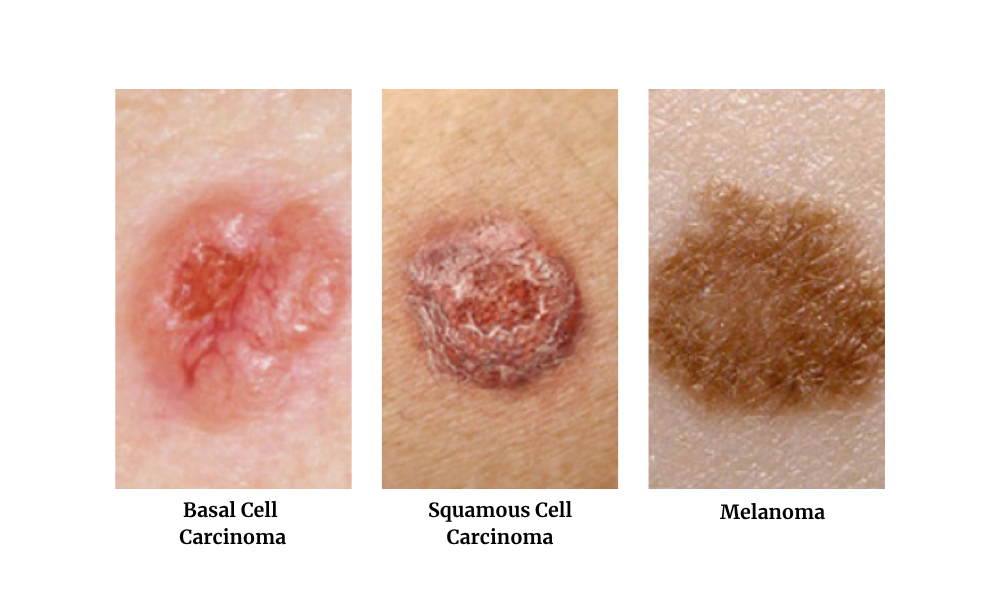
What is skin cancer? Here's what to know about the three main types
Skin cancer develops when skin cells grow abnormally, most often because of DNA damage from ultraviolet (UV) radiation. There are three main types, and they behave quite differently:
Basal cell carcinoma (BCC): The most common type of skin cancer. It grows slowly, rarely spreads to other parts of the body, and is highly treatable — but it can cause significant local damage to skin and surrounding tissue if left untreated. It often appears as a pearly or waxy bump, or a flat, flesh-colored or brown scar-like lesion.
Squamous cell carcinoma (SCC):The second most common type. It also tends to be treatable when caught early, but it's more likely than BCC to grow and spread if untreated. It often looks like a firm, red nodule or a flat lesion with a scaly, crusted surface.
Melanoma: The least common of the three, but by far the most dangerous, because it's more likely to spread to other organs. Melanoma develops in the pigment-producing cells of the skin and can arise from an existing mole or appear as a new spot. Caught early, melanoma is highly treatable. Caught late, it becomes much harder to manage — which is exactly why early detection matters so much.
What are the most important ways to prevent skin cancer?
Prevention isn't complicated! Consistency is key.
Wear broad-spectrum sunscreen (SPF 30 or higher) on all exposed skin, and reapply every two hours or after swimming or sweating.
Seek shade and cover up, especially during peak UV hours (typically 10 a.m. to 4 p.m.). A wide-brimmed hat, sunglasses with UV protection, and tightly woven fabric all help.
Avoid indoor tanning beds entirely — there is no safe dose of tanning bed UV exposure.
Check the UV index before planning extended time outdoors, and adjust your protection accordingly.
Get to know your own skin to keep an eye on any changes, and schedule a yearly skin check with a healthcare provider or dermatologist.
What’s the UV index and where can I check it?
The UV index is a scale that measures the strength of ultraviolet radiation from the sun on a given day and location, typically ranging from 1 (low) to 11+ (extreme). The higher the number, the faster skin damage can occur.
Checking the UV index before you head outside takes a few seconds (your phone’s weather app likely shows it!) and can help inform your skin protection decisions, like when to reapply sunscreen, when to seek shade, and when a hat and long sleeves are worth the extra step. Here’s a handy guide to what that number means for you:
0–2 (Low): Minimal sun danger; it’s safe to be outside.
3–5 (Moderate): Low risk; apply SPF 30+ sunscreen.
6–7 (High): Moderate risk; limit direct sun, wear SPF 30+ sunscreen.
8–10 (Very High): High risk; seek shade between 10 AM and 4 PM.
11+ (Extreme): Very high risk; unprotected skin burns in minutes
While Washington state’s UV index tends to rank lower (especially on the western side, where I am) compared to other states, it still can reach higher levels between April and September. Remember: Clouds reduce UV radiation, but they don’t block it altogether.
The ugly truth about tanning
Let me state it very clearly: there is no such thing as a safe tan.
A tan is your skin's visible response to UV damage. When skin darkens after sun exposure, that's melanin production kicking in as a defense mechanism. It means your skin cells have sustained DNA damage that raises your risk of skin cancer and accelerates skin aging over time.
Trends like tanmaxxing explicitly encourage “optimizing” tanning by going without sunscreen during the sun's most intense hours to get the deepest, fastest tan. Deliberately seeking out the highest UV index of the day isn't optimizing anything. It's just maximizing serious and lasting damage. Damagemaxxing, if you will.
That said, while tanning and sun exposure are the primary causes of skin cancer, they’re not the only risk factors. Your risk is also shaped by:
Skin type and pigmentation: While people with lighter skin have a higher risk of melanoma, skin cancer occurs in people of all skin tones and is often diagnosed later (and more dangerously) in people with darker skin.
Family history and genetics: About 10% of people with skin cancer also have a close relative who does, too.
Number and type of moles: The chances of one mole turning into cancer is low, but more moles tends to mean more risk.
A history of severe sunburns, especially earlier in life.
Immune suppression (from certain medications or health conditions)
Indoor tanning bed use, which the World Health Organization classifies in the same highest-risk carcinogen category as tobacco.
But wait, isn’t some sun exposure healthy?
Yes, that’s true – some sun exposure is good for you! In particular, the sun helps our bodies get vitamin D, which is necessary for strong bones, immune health, mood, muscle function and more.
But as with a lot of things, it’s all about moderation. We really don’t need more than about 5-20 minutes of sun exposure (without protection) twice per week. A little goes a long way!
And no, sunscreen does not cause skin cancer
This dangerous myth resurfaces periodically, but it isn't supported by the evidence. The actual research points the other way: consistent sunscreen use is associated with a reduced risk of melanoma and other skin cancers, because it reduces the UV damage that actually drives those cancers. Skipping sunscreen doesn't protect you from anything — it just removes one of the most effective, evidence-based tools you have. So slather it on!
What are the early signs and symptoms of skin cancer? Remember your ABCDEs
Knowing what to look for on your own skin is one of the most effective tools you have to detect skin cancer early. Providers use the ABCDE method to describe the warning signs of melanoma in particular:
A – Asymmetry: One half of the mole or mark doesn't match the other.
B – Border: Edges are irregular, notched, or blurred, rather than smooth.
C – Color: Uneven color, or multiple colors (brown, black, tan, red, white, or blue) within one spot.
D – Diameter: Larger than about 6 millimeters (roughly the size of a pencil eraser), though melanomas can be smaller when caught early, so don’t rule something out just because it’s small.
E – Evolving: Any change in size, shape, color, or texture over time — or a new symptom like itching or bleeding.
If you're wondering how you'd actually know if something on your skin is a concern, the honest answer is: you often can't be sure just by looking, especially with early or unusual-looking spots. That uncertainty is exactly why yearly skin checks with a healthcare provider are crucial — a professional eye (and sometimes a dermatoscope) can catch things that are easy to miss on your own, and can track changes in your skin over time in a way that's hard to do by memory alone.
Schedule your skin check!
Whether it's been a year since your last skin check, or you've never had one, now is a good time. I’m here to help you understand your risk, answer questions about anything you've noticed on your skin, and build sun-safety habits that keep you safe.
Recent Blogs