Lipoprotein(a) and the New Cholesterol Test You’ve Probably Never Heard About
New cholesterol guidance recommends that all adults get their lipoprotein(a) or Lp(a) levels checked at least once in their lifetime
by Caylin Cheney, Advanced Registered Nurse Practitioner
Sometimes when I’m deciding what to write about next, I take a look at how search trends are changing on different health topics on Google. It’s a great way to get a birds eye view of the things people are concerned about – and if there’s a gap in available, accessible information, I think about what I can write that can help fill it.
Over the last month, there’s been a 200% increase in people searching about Lp(a) tests and a 300% increase in searches about new cholesterol guidelines. This one doesn't take Sherlock Holmes to get to the bottom of it: the American College of Cardiology (ACC) and the American Heart Association (AHA) just released updated guidance on cholesterol, and it includes a new recommendation for adults to get their lipoprotein(a) or Lp(a) levels at least once in their lifetime.
So far, a lot of what’s out there is pretty wonky, so let’s talk about what lipoprotein(a) cholesterol is, why you should know if your Lp(a) levels are elevated, questions you can ask your provider, and more.
If you need a refresher on the basics of cholesterol – what LDL and HDL mean, healthy ranges to shoot for, how to lower your cholesterol, and more – be sure to check out my explainer that covers the essentials.
And if you’re worried about your cholesterol, blood pressure, or overall heart health, let’s work together! Book a visit today.
What is lipoprotein(a) cholesterol?
LDL (low-density lipoprotein) cholesterol is what you often hear called the “bad” kind. It carries cholesterol to the arteries, where it can build up as plaque and narrow your arteries.
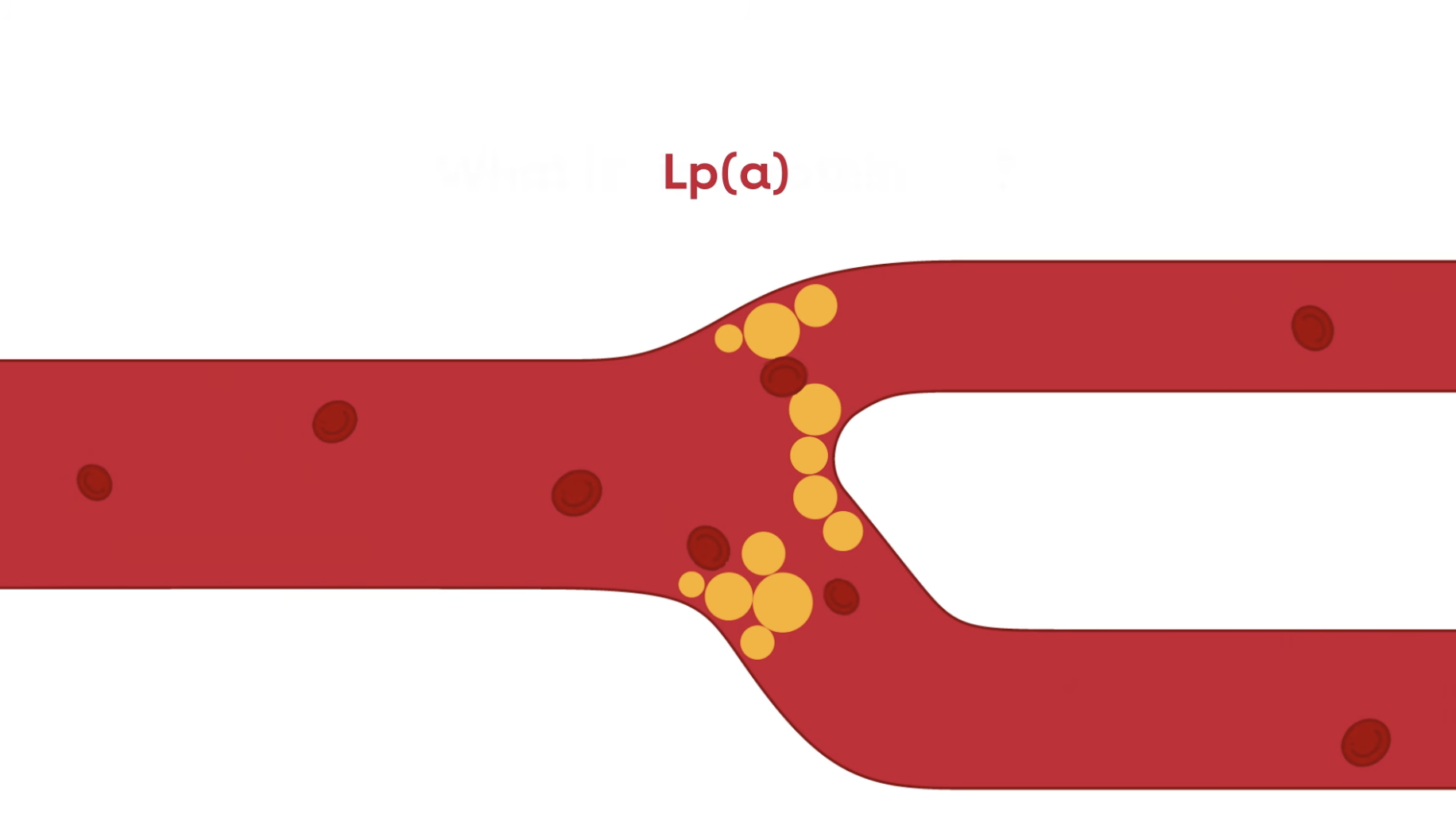
Think of lipoprotein(a) or Lp(a) as an especially "sticky" type of LDL cholesterol. And that stickiness makes it even more likely to cause blockages that make you more likely to have a heart attack, stroke, and other heart conditions. Unlike other types of cholesterol, your Lp(a) levels are mostly determined by genetic rather than lifestyle factors. The American Heart Association estimates that high Lp(a) levels affect about 1 in 5 people worldwide – and many might not know it because elevated levels rarely cause symptoms.
People of South Asian descent and African descent are most at risk for having high Lp(a) levels. Other conditions such as kidney, liver, and thyroid disease and family history may increase your risk as well, as do life stages like pregnancy and menopause.
New guidelines recommend an Lp(a) test – and it’s a game-changer
In an encouraging new development, the new cholesterol guidelines released by the American College of Cardiology (ACC) and the American Heart Association (AHA) recommend that every adult get an Lp(a) test at least once in their lifetime. The US is catching up in this case, because this type of testing is considered pretty routine in Europe.
You might be thinking, “I’ve had a lipid panel, so I’m probably covered.” That’s likely not the case! A regular cholesterol test (or lipid panel) actually doesn’t measure Lp(a) levels, so you consider talking to your provider about adding this test next time you have blood work done.
These new guidelines outline that if your Lp(a) level is “125 nmol/L (50mg/dL) or higher, your risk of heart disease and stroke may increase, and if your level is 250 nmol/L (100mg/dL) or higher, your risk may double.” Scientists are still working to understand these levels but these are good guidelines. You can work with your provider to understand your results with these numbers in mind.
Questions to ask your provider as an empowered patient
You should never feel shy or worried when asking questions about your health or tests you’re wondering about. In fact, when people feel heard and respected by their provider, they are far more likely to speak up, follow through on medical advice, and build a lasting relationship with their care team.
My practice is founded on the idea of patient autonomy. It’s the firm belief that you have a right to make your own informed health care decisions.
Here are some examples of questions you could ask your provider at your next visit:
“Based on the 2026 guidelines, should we check my Lp(a) levels?”
“Would additional tests give us a better look at my heart risk than a standard lipid panel?”
“I have a family member with high Lp(a) levels. I’m concerned about mine – can we get it tested?”
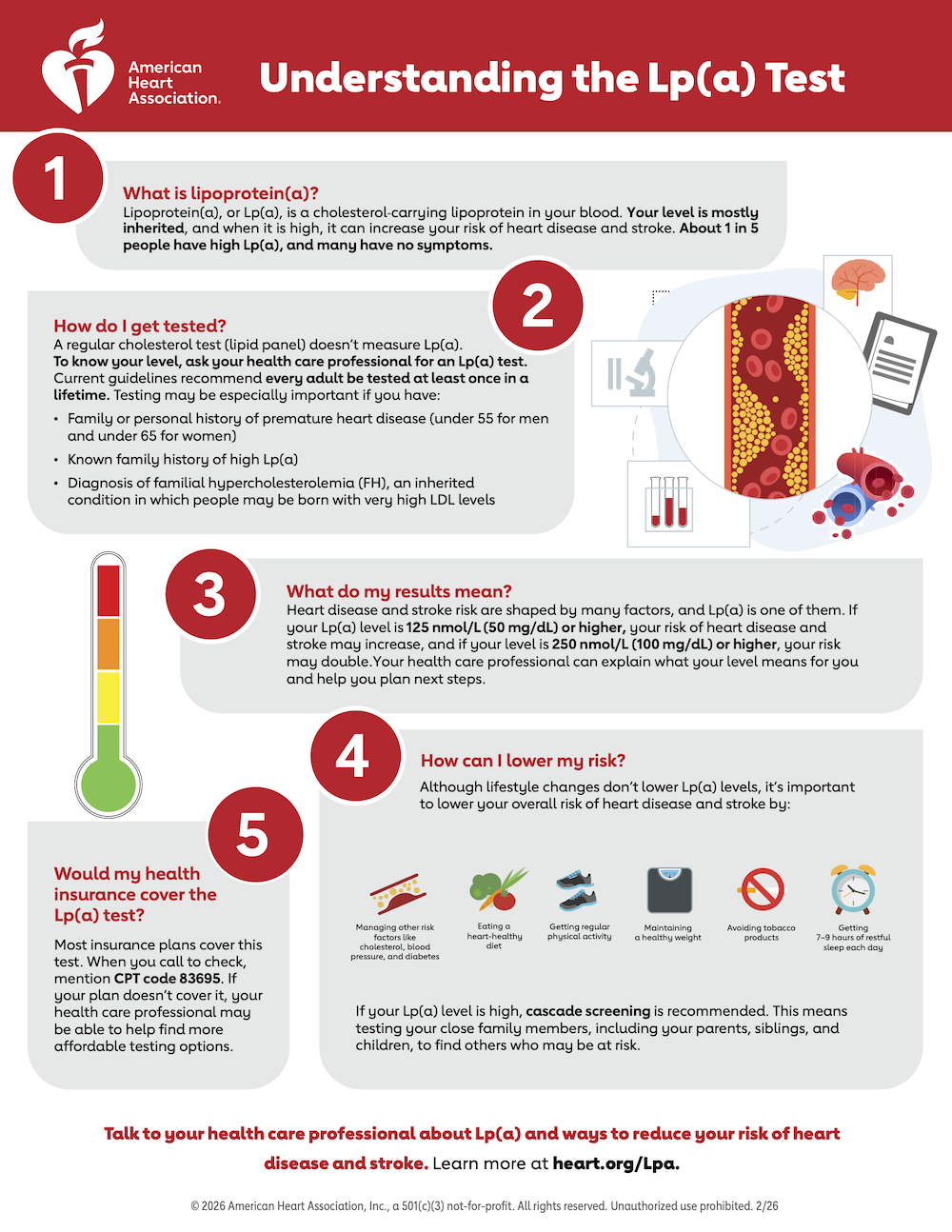
A fact sheet on understanding the Lp(a) test from the American Heart Association.
What happens next if my Lp(a) cholesterol levels come back high?
Unfortunately there are currently no FDA approved medications for treating high Lp(a) cholesterol. But some promising treatment options are on the horizon!
This doesn’t mean you’re powerless in improving your health right now, though. If you have elevated Lp(a) levels, you can still work to lower your overall LDL cholesterol through lifestyle changes like prioritizing exercise, committing to a heart healthy diet, and stopping tobacco use. While these changes will not lower your Lp(a) levels, they will improve the overall health of your heart, which is vital to reducing your risk for cardiovascular disease, heart attack, and stroke. Lp(a) is important for helping to give you a broader picture of your cardiovascular risk and what steps you can take to protect your heart.
Remember this if you’re feeling overwhelmed
Science is still catching up to the complexity of the human body! These new cholesterol guidelines aren't bad news – they simply offer better tools to understand your risk and keep you healthy!
And if your tests reveal that your Lp(a) or other types of cholesterol levels are elevated, don’t forget that you aren’t alone. In fact, 11% of adults in the United States have elevated cholesterol levels (and I’ve been working to improve my own as well!). Knowledge is your best tool for making informed health decisions.
Instead of feeling overwhelmed, let’s sit down and create a manageable plan together. I offer online appointments for people throughout Washington and in-person in Seattle. Schedule your appointment today.
More on Heart Health