
Scientists are finally starting to solve the mystery of why women are so much more prone to autoimmune disease. Here’s why that really matters.
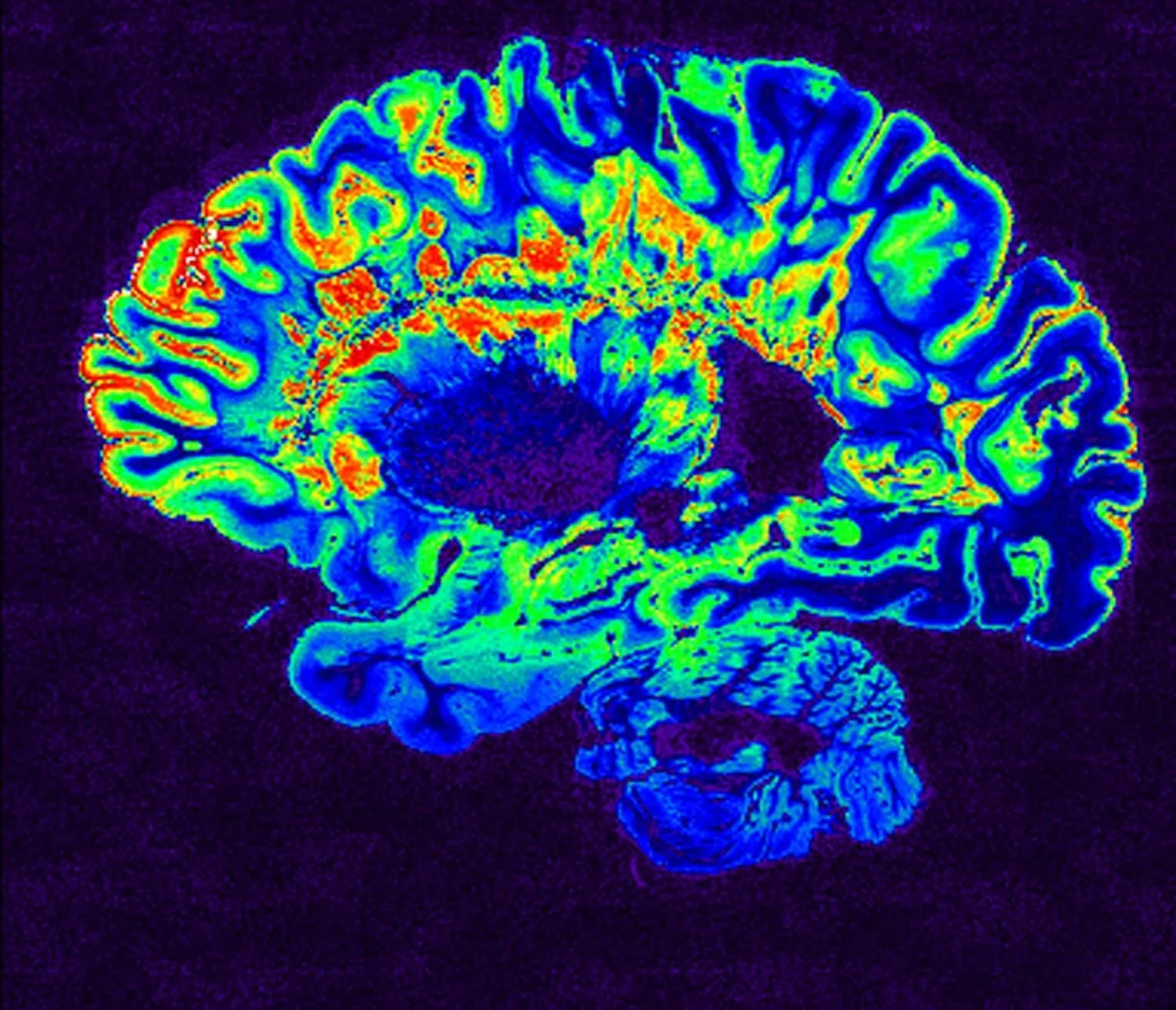
A pseudo-colored scan of a person’s brain who has multiple sclerosis. Women are four times more likely to have MS than men. (Image: National Institutes of Health)
by Caylin Cheney, Advanced Registered Nurse Practitioner
Women’s History Month is a moment to celebrate the many achievements and contributions of women throughout history – and to commemorate the ongoing fight for gender equality, reproductive rights, and pay equity.
It’s also a perfect moment to look at the history and future of women’s health. Health, of course, is the very foundation we all rely on to live a happy and successful life: to pursue education, to go to work, to build communities, and to enjoy doing things we love. Health outcomes are driven by many non-medical factors like housing, education, and safe environments.
But as a nurse practitioner, I think this is also a time to shine a light on medical inequities that still impact women today – specifically autoimmune diseases and how conditions like these often go understudied and undertreated.
Here are five things I have learned from recent research I have been reading that I want to share with you.
A note about using the word “women” in this blog:
Please note that the research below is about folks who are assigned female at birth. We continue to need more research about how autoimmune diseases affect transwomen (and more research on trans health and wellness in general!).
1. The 80% reality
It’s a staggering statistic: nearly 80% of all autoimmune disease cases occur in women – and these conditions are in the top 10 causes for women dying under the age of 65 globally. While diseases like lupus, rheumatoid arthritis, and multiple sclerosis are common household names, the fact that they overwhelmingly impact people assigned female at birth is a clear sign that they need more specialized research, care, and attention.
Some facts:
Women are three times more likely to have rheumatoid arthritis;
Four times more likely to have multiple sclerosis;
Nine times more likely to have lupus; and
Nineteen times more likely to have Sjogren's syndrome.
2. The "X" factor: Why women are more likely to develop autoimmune diseases
For decades, science couldn't fully explain the gender disparity in autoimmunity. However, groundbreaking research from Stanford has identified a major culprit: “A molecule made by one X chromosome in every female cell can generate antibodies to a woman's own tissues.”
In biology, females typically have two X chromosomes (XX) and males have one X and one Y (XY). The X chromosome contains many instructions for the body, but having two "active" sets is actually dangerous — a toxic overdose of information for the cells.
To fix this, every female cell essentially "wraps up" one of the X chromosomes and turns it off. To turn off that extra X chromosome, the body produces a specific molecule called Xist. Scientists believe the immune system may mistakenly start seeing Xist as a "foreign invader" and attack it, which could be one explanation for why women are so much more likely to have autoimmune diseases.
Part of the reason why this went unknown for so long? Because most research and tests about autoimmune diseases were conducted using male cells, not female ones.
3. The "double whammy" of heart health
Autoimmune diseases don’t exist in a vacuum, either. Recent findings from the American Heart Association show that women with common autoimmune diseases face a significantly higher risk of death from heart disease and stroke than men with the same conditions. In fact, “women with rheumatoid arthritis, lupus or systemic sclerosis were more than twice as likely to die because of arrhythmia or cardiac arrest than their male counterparts in the 22-year study period.”
This suggests that inflammation affects women’s cardiovascular systems differently and, as the lead study author said, “reinforces the need to investigate drivers of these disparities between women and men.”
4. A long, long history of underrepresentation in research
We can’t talk about women’s history and health without acknowledging data gaps, like the one that led to the mysteries around autoimmune diseases for so long.
For years, medical research and clinical trials relied primarily on male cells and male subjects, assuming that results would simply translate directly to women. Between 1977 and 1993, the Food and Drug Administration did not allow women “of reproductive potential” in most clinical trials. Today, they still remain “substantially underrepresented, according to Harvard research.
This has led to a lack of understanding of how female biology interacts with disease. Closing this gender gap in research is not just about fairness – though of course it is vital that women receive accurate diagnoses and effective treatments. “Failing to close this gap isn’t just unfair, it’s dangerous. As we brace for future pandemics and medical challenges, continuing to treat women as afterthoughts in medicine is a crisis waiting to happen. The world cannot afford to ignore half its population,” write Kavita Singh and Renu Swarup in Nature.
5. A hopeful turning point: The NIH Office of Autoimmune Disease Research
There is hope on the horizon for everyone with an autoimmune disease. Recognizing the historical neglect of these conditions, the NIH established the Office of Autoimmune Disease Research (OADR) within the Office of Research on Women’s Health in 2022.
This marks a historic shift in how the US government prioritizes and coordinates research, and hopefully the unique ways these diseases manifest in folks assigned female at birth are finally given the attention they deserve.
I believe this: To honor the women of the past, we must invest in the health of women in the future.
I built Whole Person Well Care to offer the kind of care most people wish they could find: Care that is thoughtful, holistic, and deeply personal.
Do you need extra support on your health journey? Whether you’re looking for support with an autoimmune disease, heart health, or just general wellness, I can help.
Recent Blogs